
Built on Centuries of Storytelling: The History of Southwark SE1
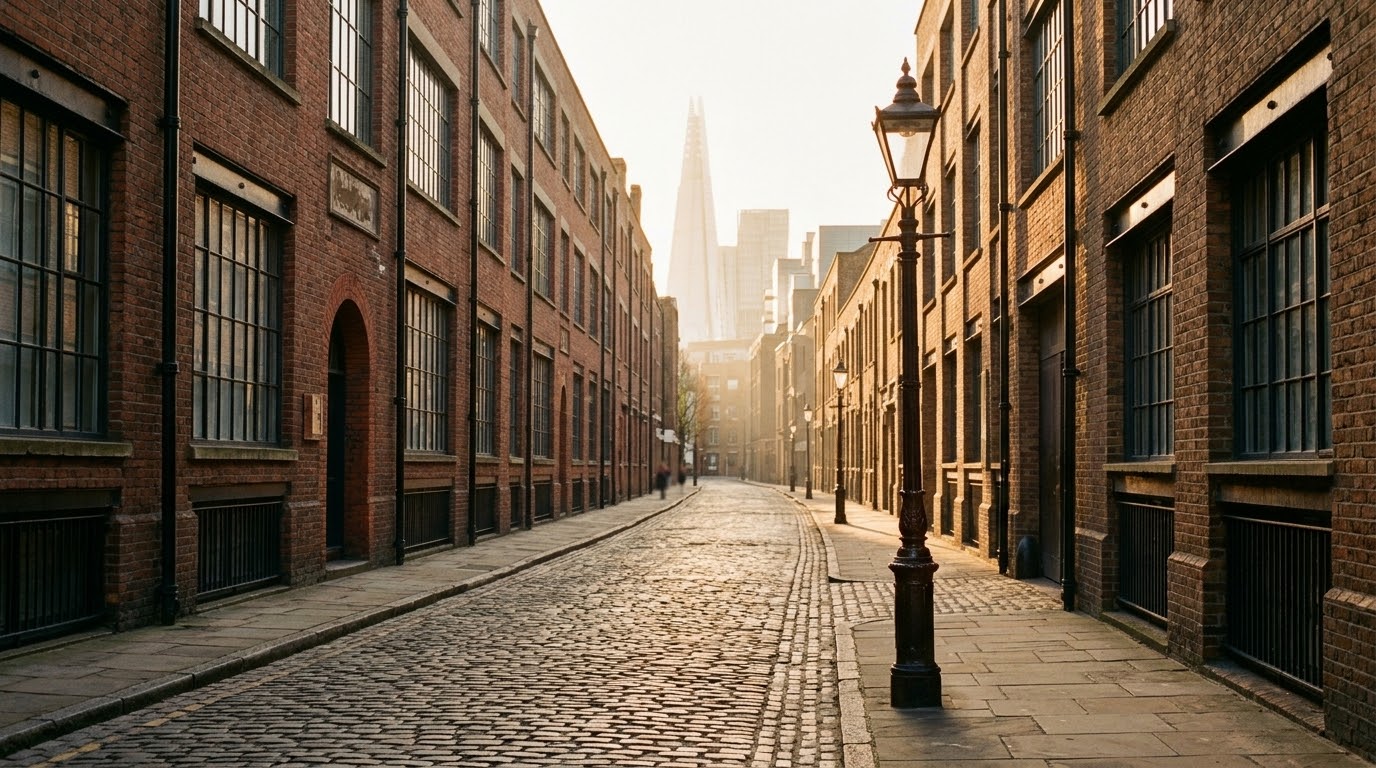
Walk five minutes in any direction from Risborough Street and you are stepping across nearly two thousand years of London's most colourful history. Long before the skyline was crowned by The Shard and Tate Modern, Southwark was the capital's free-spirited southern gateway—a place of Roman crossroads, medieval inns, royal palaces, Elizabethan playhouses, and Victorian literary legends.
Four Defining Eras of Southwark SE1
Medieval & Tudor
Chaucer's pilgrims at The Tabard Inn (14th C) and Henry VIII's Suffolk Place & Mint (1500s).
16th & 17th Century
Shakespeare's original Globe on Bankside and Southwark's pivotal 1643 Civil War transformation.
Victorian to Modern
Charles Dickens's Lant Street inspiration for Little Dorrit through to Bankside's global cultural renaissance.
From Roman Bridgehead to Tudor Liberty
Southwark's story began around AD 43 when Roman engineers built the first bridge across the Thames, making the southern bank London's original crossroads for trade and travel. Because it stood outside the strict legal jurisdiction of the walled City of London, Southwark evolved into a vibrant, independent district of its own.
In the 14th century, Geoffrey Chaucer launched the pilgrims of The Canterbury Tales from The Tabard Inn right along Borough High Street. Two centuries later, King Henry VIII acquired magnificent Suffolk Place nearby and established a royal mint—giving the neighbouring Mint Street area its enduring name—while Southwark's historic Borough Market grew from a medieval riverside trading post into London's oldest continuously operating food market.


Shakespeare's Bankside, 1643 & Dickensian Streets
By the late 1500s, Bankside had become England's theatre capital. Outside the reach of City censors, William Shakespeare and the Lord Chamberlain's Men erected the original Globe Theatre in 1599, debuting Hamlet, Othello, and Macbeth just minutes from today's Risborough Street.
The mid-17th century proved equally defining: in 1643, during the English Civil War, Southwark was encircled by fortifications defending London's southern approach—cementing its transition from royal Tudor parklands into a self-reliant urban borough. Two centuries later, a young Charles Dickens lodged on neighbouring Lant Street while his father was held in the Marshalsea debtors' prison, weaving Southwark's alleys, churches, and brick terraces immortally into Little Dorrit and The Pickwick Papers.
Heritage Meets Contemporary Architecture Today
Few global neighbourhoods carry so much authentic texture without feeling frozen in amber. Today, Victorian warehouses and Georgian coaching lanes sit seamlessly beside Bankside's contemporary architectural landmarks—giving homes like The Re[SE1]dence and 1 Risborough Street a sense of provenance and cultural permanence that newly minted districts simply cannot replicate.